
Nov 24, 2026 · 5 min
Vendor lock-in: how to avoid being tied to a software provider
It's rarely noticed when signing. It shows up the day something needs to change.
Services
AI Solutions DevelopmentCustom AI TrainingsAI Workspace SetupIndustries
ManufacturingEcommerceHR AgenciesForeign TradeAccounting FirmsMarketing AgenciesInsuranceHealth ServicesLegal & NotaryReal EstateFinancial ServicesLogisticsSomeone who sits with the team, learns the operation and builds right there, with the exit planned from day one.
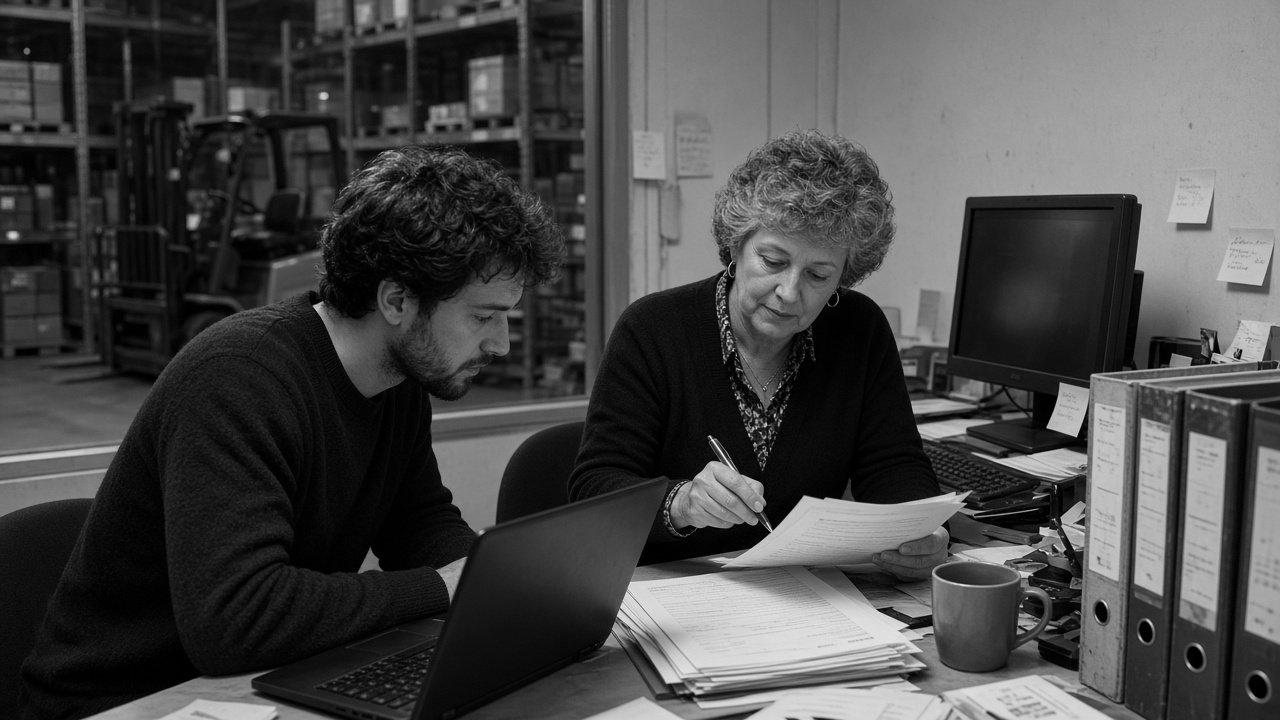
Some ideas never leave the meeting where they come up. A dashboard that brings together data from three systems, a supplier portal, an agent that drafts quotes. The company knows what it needs, but between the request and something that works there are months of specs, budgets and back-and-forth. The forward deployed engineer, or FDE, is a role designed to shorten that distance: a technical person who sits with the team, learns how the work really gets done and builds the solution right there.
The term has been around the software industry for years, but in 2026 it started showing up everywhere. It's worth understanding what it is, where it comes from and when it makes sense for a company that wants to modernize its operation.
A forward deployed engineer is a software engineer who works embedded in a client's operation, with its systems, its data and its people, to take a solution to a concrete business problem into production. Success is measured by the impact on that problem, rather than by hours billed or features shipped.
Forward comes from military vocabulary and describes someone on the front line, close to where things happen. The full way of working is called forward deployed engineering.
The role was born at Palantir, a data analytics software company. In a 2019 post on its blog, the company explained its two largest engineering roles. "Devs" build the platform, and their focus is "one capability, many customers." "Deltas," the forward deployed software engineers, work inside a single customer, and their focus is "one customer, many capabilities." The name Delta goes back to the early days, when each business development team was named after a letter of the NATO alphabet.
The same post addressed a common misconception: people tended to see Deltas as consultants. One of them answered that consultants usually produce a one-time analysis or recommendation, while an FDE builds a long-term solution with the customer that lets it keep improving.
On Palantir's projects the FDE rarely worked alone. According to another post on the same blog, teams combined forward deployed engineers with deployment strategists, closer to a product manager role, although in practice the two blurred a lot. That pairing of product and engineering, sitting next to the customer, is the idea the whole industry is copying today.
The work varies by project, but it usually follows the same path:
Understand the problem where it happens. Talk to the people doing the work, look at the spreadsheets, the systems and the exceptions no manual covers.
Build on what already exists. Connect current data and systems instead of requiring everything to be migrated before starting.
Get to production fast. Put a first version in the hands of real users and adjust it based on daily use.
Measure against the business goal. Less time per task, fewer errors, a decision made with better data.
Leave the team ready to continue. Document, train and hand over what was built.
All four models help technology work inside a company. They differ in what they deliver, where they work and when the engagement ends.
| Model | What it delivers | Where it works | When it ends |
|---|---|---|---|
| Traditional consulting | Diagnosis, recommendations and a roadmap | Mostly from the outside, through interviews and data samples | When the report is delivered |
| Software agency | Software built to a specification | Within its own team, delivering by milestones | When the agreed scope is met |
| In-house team | Maintenance and evolution of existing systems | Inside, with full context | It's permanent |
| Forward deployed engineer | Working software on a business problem | Inside the operation, with real data and users | When the company's team can run it alone |
The difference with a software agency is the starting point. An agency needs a clear specification to do good work. An FDE starts earlier and helps figure out what's worth building, because requirements often only surface once the work touches real data and users.
With the in-house team the relationship is complementary. The people who know the current systems know where the data lives and what's better left alone, but their calendars are usually full with what already exists. An FDE adds capacity to build what's new and, when the work is done well, leaves that knowledge inside the company.
AI models keep getting more capable, but they're general. To solve something concrete inside a company they have to be connected to its data, its systems and its processes, and that part doesn't come included. An AI agent, for example, is only useful if it can read and write in the systems where the work happens.
At the same time, writing code became much faster, which already changed the math of custom software. The bottleneck moved elsewhere: understanding the problem well, deciding what to build and getting people to use it. Exactly what an FDE does.
Gartner included the role among its top strategic trends in software engineering, presented in November 2026. According to the firm, by 2028 more than 70% of AI technology and service providers will use forward deployed engineers to accelerate adoption, up from 10% today.
The model fits some situations better than others.
When the problem is specific to the operation. The way a company quotes, coordinates a particular logistics flow or serves a certain kind of customer. If the need is standard, like accounting or payroll, buying a product is usually the better call.
When the work lives between systems. Data spread across a traditional ERP, spreadsheets and email, with people copying from one screen to another. For companies running legacy systems, it allows building around what already exists without a full migration.
When not everything is known upfront. If requirements will surface while working with real data, a spec frozen at the start tends to go stale fast.
When nobody inside can drive it. Many companies have the idea and the budget, but not a team with the time and experience to take it to production.
An FDE works so close to the operation that, if the project isn't designed well, it can create a new dependency. Gartner warned about this in a September 2026 report: it expects that by 2028, 70% of enterprises will abandon agentic AI built by vendor FDEs, because of rising costs and being unable to evolve it on their own. It also notes that the label is being applied to very different services.
The report's recommendations fall into three moments:
Before signing. Define intellectual property, knowledge transfer and the exit plan from day one, with an internal sponsor accountable for the business outcome.
During the engagement. Work alongside domain experts, engineers and end users, so knowledge is shared and the solution reflects how work actually gets done.
At the close. Execute the agreed exit and measure success by the company's ability to run and evolve what was built.
It's the same logic that applies to any software project to avoid vendor lock-in: code and data owned by the company, documentation people actually use and an internal team that understands what it has.
Ambolt works with a forward deployed engineering model. Its teams combine product profiles with business experience and builders who take things to production, sitting next to the company's team. The work follows three phases:
1. Assessment. AI-assisted interviews and diagnostics to map how work really gets done. The output is a roadmap prioritized by effort and impact.
2. Implementation. Buy or build, whichever solves the problem faster. It's co-designed with the company's team, on its real data and workflows, with weekly demos.
3. Handoff. Hands-on training by role, clear documentation and a system the team runs end to end.
The third phase is the answer to Gartner's warning. The goal is for the company to end up with the system running and the ability to keep evolving it.
The forward deployed engineer puts a technical person next to the people who know the business, on real data, until the solution works. AI made the role more necessary: models are powerful but general, and someone has to connect them to the data and processes of each operation. The useful question for a company goes beyond whether to work this way: how the project ends matters too. If, at the end, the company's own team can run, change and extend what was built, the model adds speed and independence.
It's a software engineer who works embedded in a company's operation, with its data, systems and team, to take a solution to a business problem into production. The role is known by the acronym FDE.
They understand the problem alongside the people doing the work, build on existing systems, get a first version into use quickly, adjust it with real data and leave the company's team able to run it.
A traditional consultant usually delivers a diagnosis, a recommendation or a roadmap. A forward deployed engineer builds the solution inside the operation and is accountable for it working in production.
A product software engineer builds features used by many customers. An FDE works for one customer and combines many capabilities to solve its problem. Palantir summed it up as "one capability, many customers" versus "one customer, many capabilities."
It's the delivery model in which a provider places engineers and product people inside the client's operation to design, build and integrate solutions in production, instead of working at a distance from a specification.
When the problem is specific to the operation, when data is spread across several systems, when requirements will be discovered along the way and when there's no internal team with time to take it to production. Code ownership and the handover plan should be agreed from the start.
About Ambolt. Ambolt works with a forward deployed engineering model to build modern software tailored to each company's operations, with AI where it helps, and leave it in the hands of its team so business leaders can keep launching their ideas with autonomy.
 Ramiro MoyanoPartner at Ambolt StudioPublished
We specialize in finding areas to optimize your company's operations, making them leaner, faster and more productive.
Talk to us →